
One of the most relevant parts of the 2026 AHA/ASA adult stroke rehabilitation and recovery guideline is its recommendation on technology-supported cognitive training.
In the Guideline Central pocket guide summary, the recommendation is that people with stroke and cognitive impairments should receive supervised moderate- to high-intensity technology-supported cognitive training programs that are tailored and adaptive to performance to improve global cognition, attention, and working memory.
That is a meaningful statement for rehabilitation teams, digital health leads, and service planners. It also needs careful interpretation. The recommendation does not mean that every digital tool is suitable, or that technology replaces therapy. It means that technology-supported training can have a place when it is supervised, appropriately dosed, personalised, and clinically integrated.
Technology-supported does not mean unsupervised
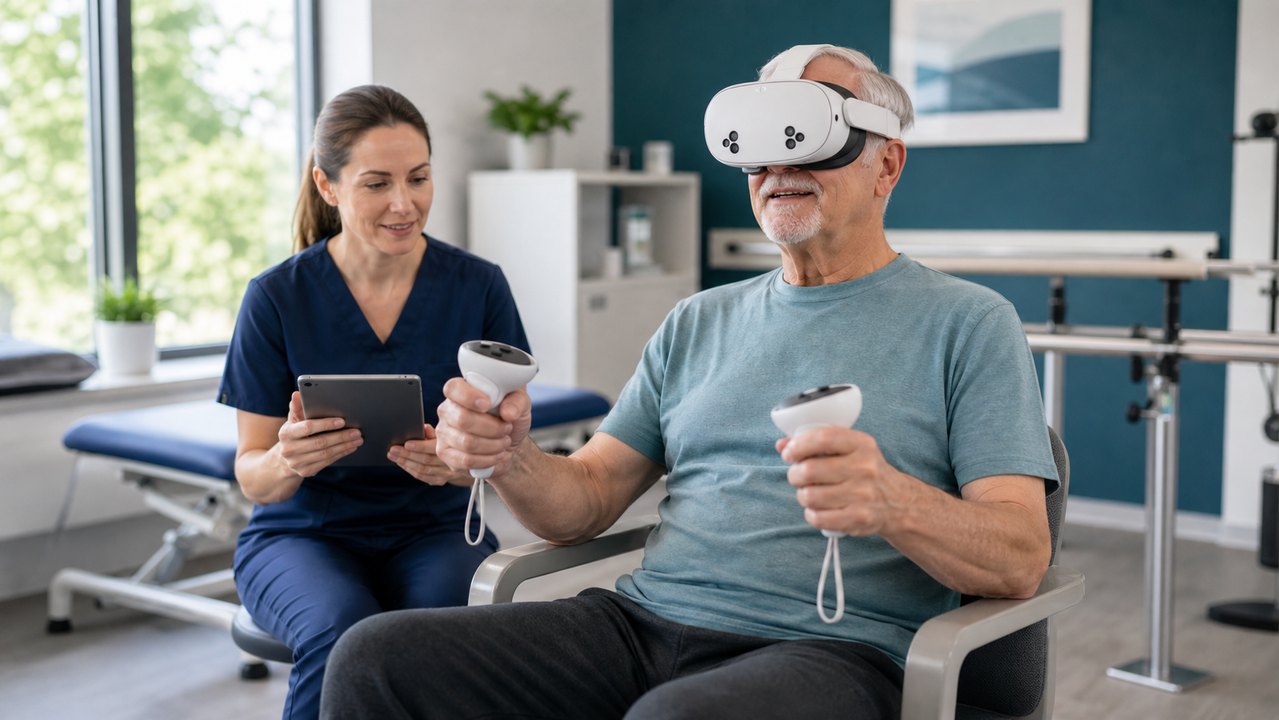
The word supported is important. A digital tool can deliver practice, structure, feedback, prompts, or data, but the rehabilitation plan still belongs to the clinical team.
For cognitive impairment after stroke, supervision may involve selecting the right activity, setting a safe level of challenge, monitoring tolerance, responding to fatigue or frustration, adjusting the plan, and deciding whether the activity is still clinically useful.
If a tool is sent home without a clear plan, review process, support route, or escalation pathway, it may be digital, but it is not necessarily good rehabilitation.
Tailored and adaptive training is the real issue
Cognitive impairment after stroke is not one thing. One person may mainly struggle with sustained attention. Another may have memory problems, visual scanning difficulty, sequencing errors, reduced initiation, slowed processing, or fatigue. Many people have a mixture of needs.
This is why a fixed one-size-fits-all programme can be weak. Tailored training should let the clinician match the task to the person’s goals and current ability. Adaptive training should allow the challenge to change as performance changes.
In practice, useful adaptation might include reducing or increasing the number of task steps, changing visual complexity, adding or removing distractors, adjusting prompts, repeating a task until it is familiar, progressing from recognition to sequencing, or changing session length when fatigue is a factor.
The clinical question is not whether the technology looks impressive. It is whether the challenge is pitched correctly and whether the clinician can understand what happened.
Why intensity needs careful design
The guideline uses moderate- to high-intensity language, and its top take-home messages also emphasise sufficient amounts and intensity of task practice after the earliest acute period.
For cognitive rehabilitation, intensity is not only about minutes. A session can be cognitively demanding because it requires attention, working memory, decision-making, sequencing, visual search, error recognition, and inhibition. More time is not automatically better if the patient becomes overloaded, unsafe, or disengaged.
Good technology-supported rehabilitation should therefore support graded intensity. It should help clinicians decide when to repeat, when to progress, when to simplify, and when to stop.
What to look for in a cognitive training tool
Service teams considering digital cognitive rehabilitation should ask practical questions.
Which cognitive skills does the task actually require? Can clinicians set the difficulty? Can the activity be connected to functional goals? Is the product safe and tolerable for the intended patient group? Does the clinician get useful review information? Are patients and helpers supported outside the clinic? Is the product governed appropriately for healthcare use? Is there a process for adverse events, support issues, and withdrawal?
These questions are not obstacles to innovation. They are what make innovation usable in real rehabilitation services.
Where immersive VR can fit
Immersive VR can be helpful because it allows cognitive practice to take place inside simulated everyday environments. Instead of a flat-screen exercise, the patient can interact with objects, scan a scene, follow a sequence, make choices, and practise a task in a controlled space.
That can make practice feel more relevant. It can also give clinicians useful observations: did the person find the object, follow the order, notice the error, use prompts, maintain attention, or become fatigued?
For CorteXR Stroke, the relevant design principle is supervised, configurable, ADL-based practice rather than entertainment-led VR. The platform should be judged by whether it helps clinicians deliver purposeful cognitive rehabilitation, not by novelty.
The useful takeaway
The 2026 AHA/ASA guideline creates a helpful standard for the field. Technology-supported cognitive training after stroke should be supervised, tailored, adaptive, sufficiently intensive, and connected to meaningful clinical goals.
In practical terms, this sets a higher standard than generic brain games. Services should look for tools that are clinically configurable, measurable, and usable within real pathways of care.
Useful references
- 2026 AHA/ASA guideline in Stroke: Adult Stroke Rehabilitation and Recovery
- Guideline Central: AHA/ASA Adult Stroke Rehabilitation and Recovery pocket guide
- AHA newsroom: Stroke rehab should start early and address physical, cognitive and mental health
Medical note: This resource is for general information and service planning. Stroke survivors and families should follow advice from their own clinical team.