Clinical Evidence

Published evidence for immersive cognitive stroke rehabilitation.

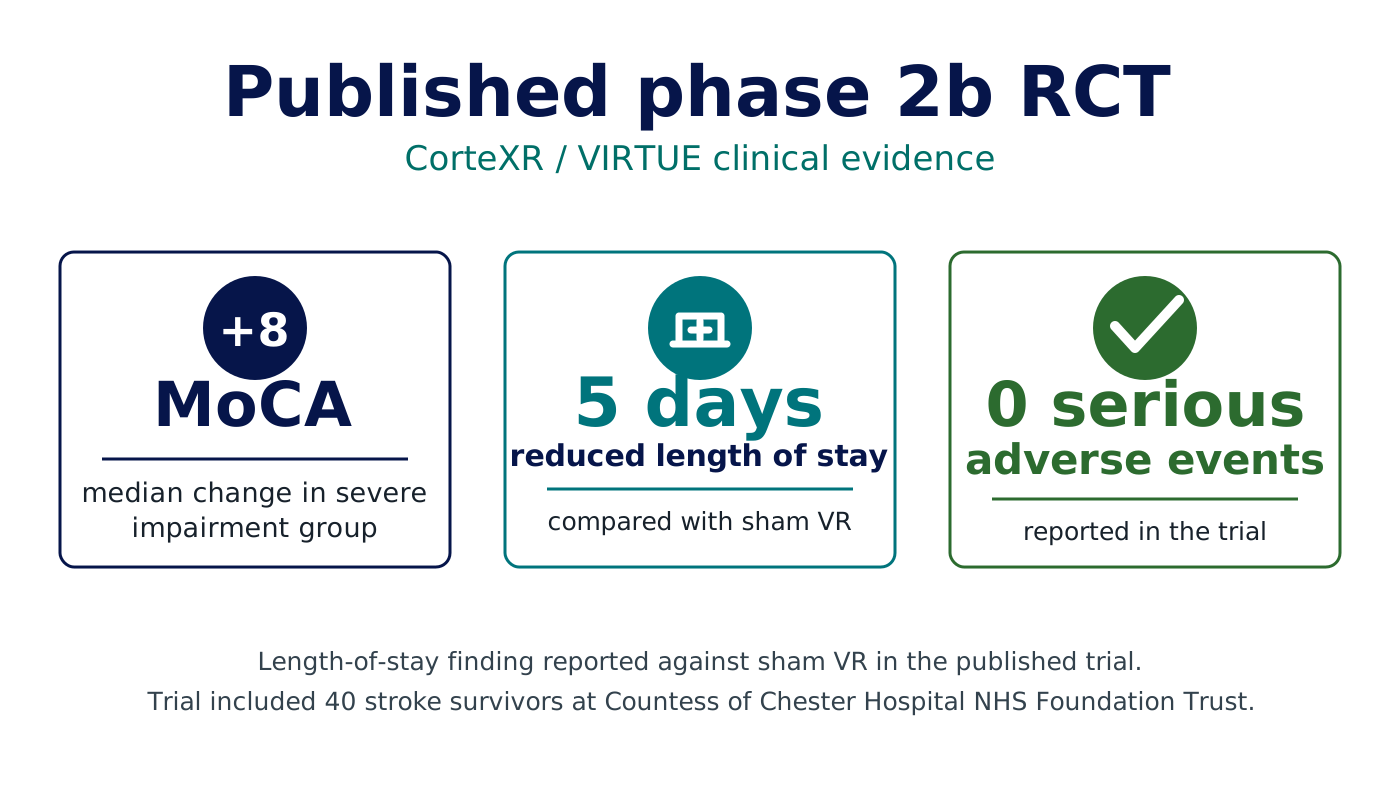
The published VIRTUE clinical trial reported improved MoCA scores in patients receiving immersive VR cognitive rehabilitation, a reduced length of stay compared with sham VR, and no serious adverse events.

+8Median MoCA change in severe impairment group
5 daysReduced length of stay compared with sham VR
0Serious adverse events reported
40Stroke survivors in phase 2b RCT

Published phase 2b RCT

Reported cognitive improvement and earlier discharge signals in post-stroke rehabilitation.

The study evaluated immersive virtual reality as an adjunct to standard care for stroke survivors with documented cognitive deficits. The intervention used realistic virtual Activities of Daily Living, tailored difficulty, and repeated practice to support attention, memory, orientation, and task sequencing.

The headline findings were a median MoCA improvement of +8 points in the severe cognitive impairment group, reduced length of stay compared with sham VR, and no serious adverse events reported.

Summary of CorteXR clinical evidence: phase 2b RCT, 40 stroke survivors, MoCA change, length of stay before home discharge, and safety

Study design

Randomised, controlled, and focused on real-world cognitive tasks.

Methodology

The trial was a double-blind, randomised controlled study involving 40 stroke patients with documented cognitive deficits. Participants received either VR-based cognitive rehabilitation alongside standard care or a sham VR intervention as placebo control.

Intervention

The CorteXR/VIRTUE platform immersed participants in realistic, interactive scenarios designed to simulate activities of daily living, such as preparing a meal or managing transactions in a cafe. Tasks were tailored to individual ability with adjustable difficulty levels.

Outcome measures

The primary outcome measure was cognitive improvement assessed using the Montreal Cognitive Assessment at the conclusion of treatment and three months post-randomisation. Secondary measures included satisfaction, safety assessments, and duration of hospital stay.

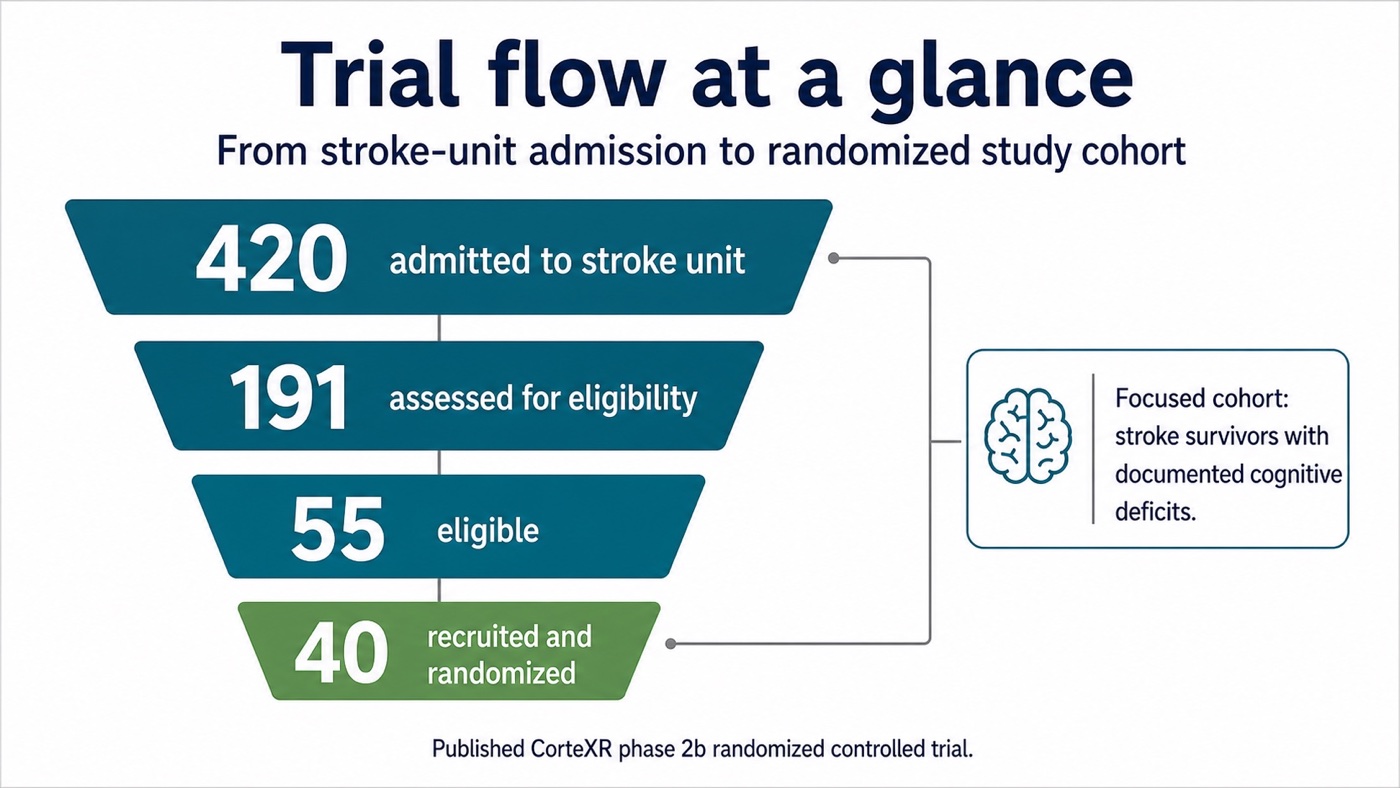
Trial flow infographic showing randomised controlled study design

Trial structure

Participants were randomised between VR-based cognitive rehabilitation and sham VR control conditions, enabling comparison against placebo exposure.

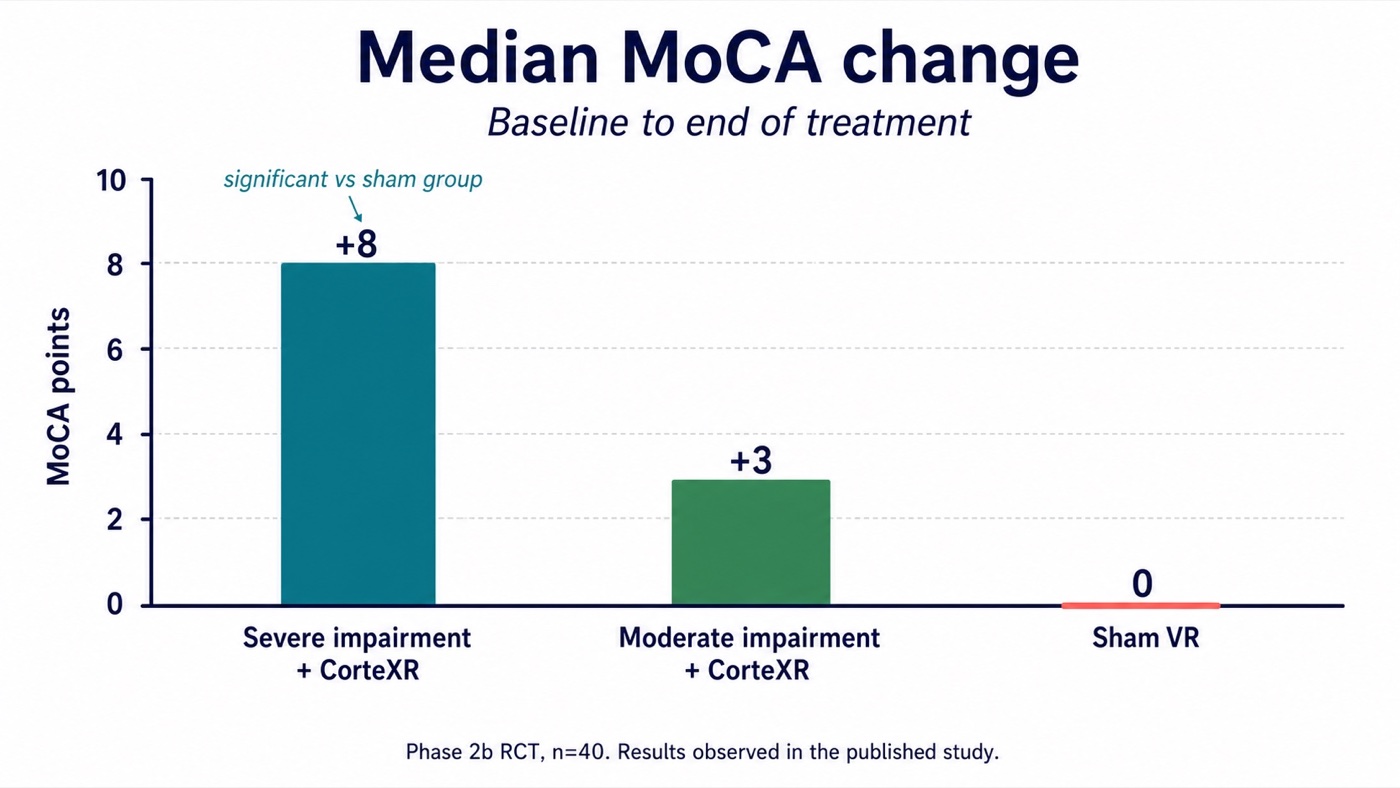
Median MoCA change chart comparing severe impairment, moderate impairment and sham VR groups

Cognitive outcomes

The published study reported median MoCA improvements in intervention groups, with the largest reported change among patients with severe cognitive impairment.

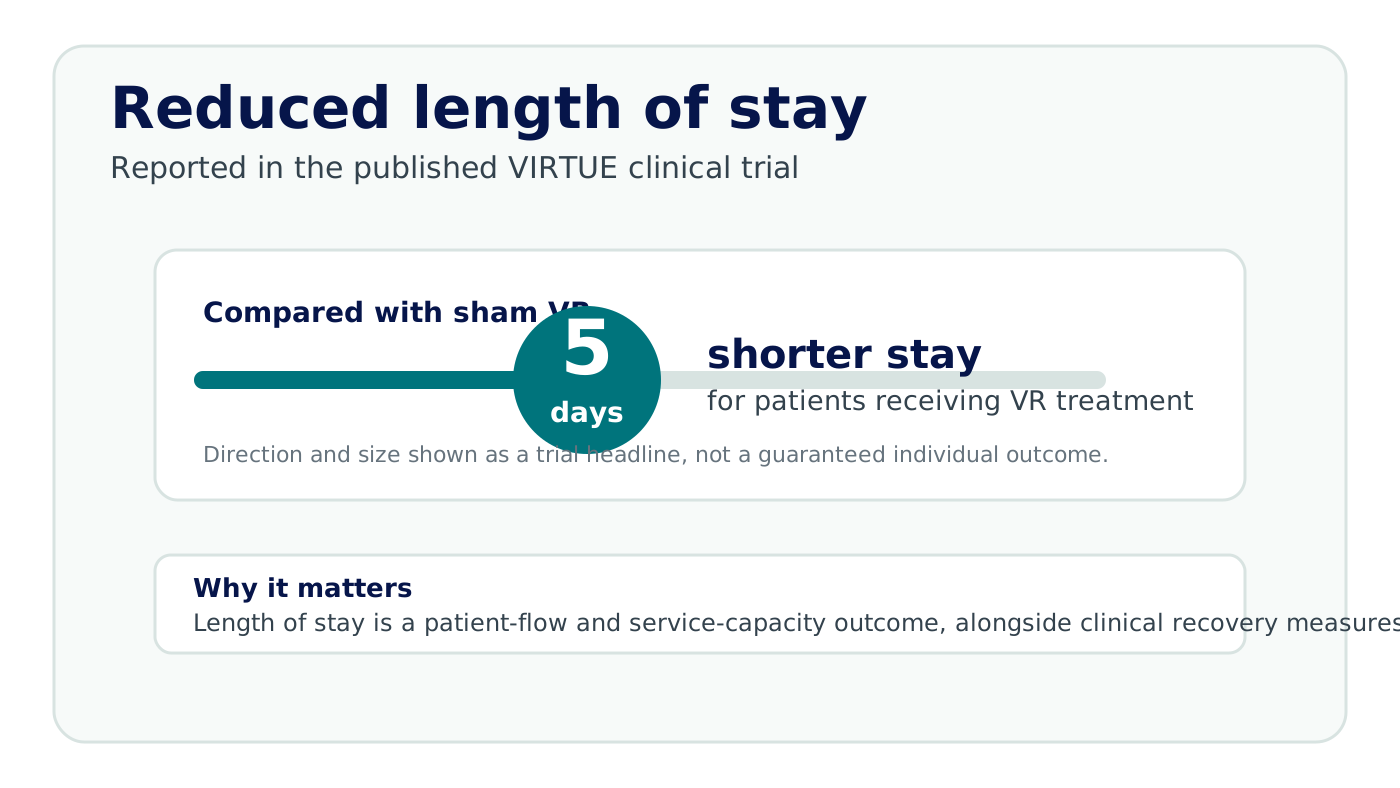
Length of stay chart showing five days reduced length of stay compared with sham VR

Length of stay

The published study reported a reduction in length of stay for patients receiving VR treatment compared with sham VR, supporting an earlier-discharge and patient-flow message.

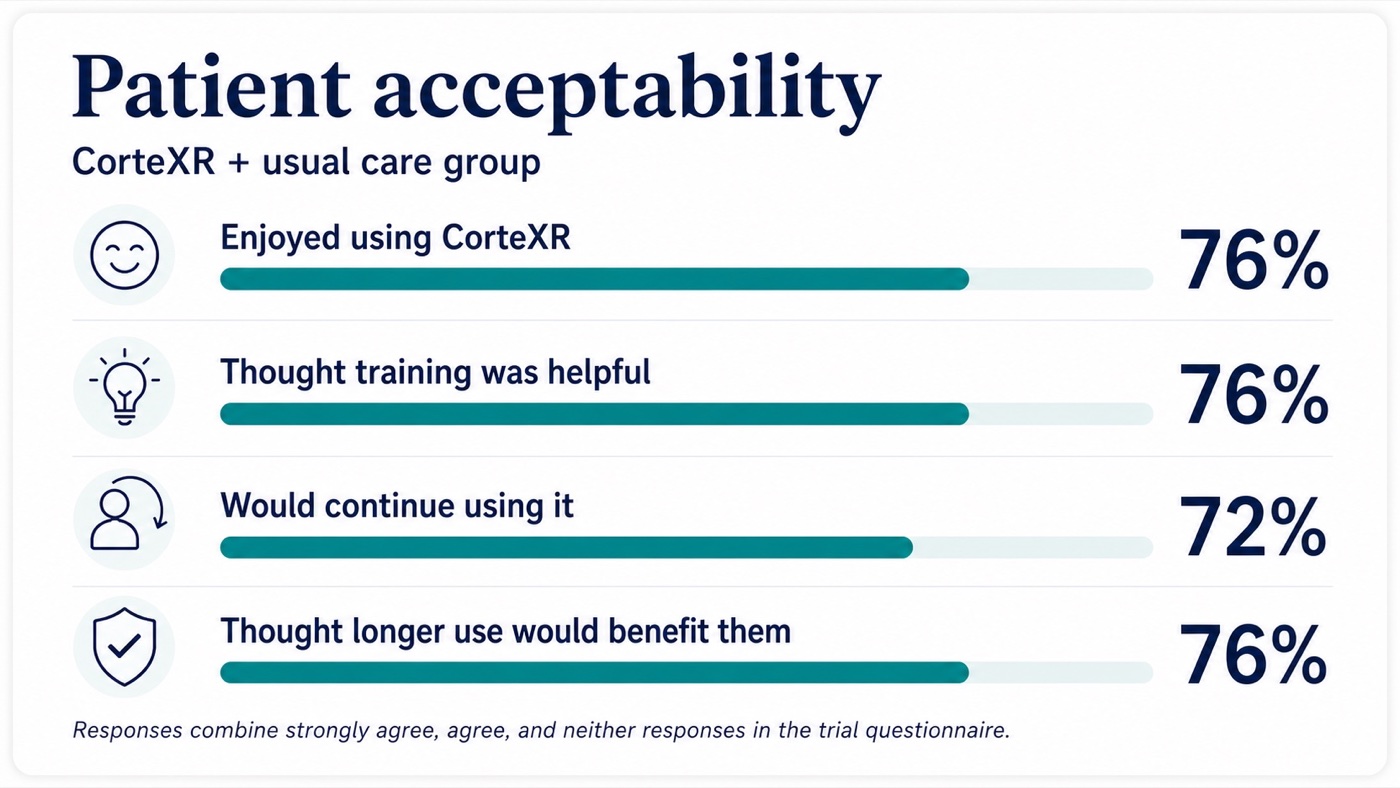
Patient and staff acceptability chart for VR rehabilitation

Safety and acceptability

The study reported no serious adverse events and high acceptability, with minor issues such as transient dizziness or headset discomfort managed during sessions.

Key findings from the published study

Safety and acceptability

CorteXR demonstrated high levels of safety in the study, with no serious adverse events reported. Patients and healthcare staff rated the system highly for usability, engagement, and satisfaction.

Cognitive improvement

Participants in the intervention group exhibited improvements in cognitive domains including attention, memory, and orientation. Existing material notes that patients with severe cognitive impairments showed the most pronounced gains.

Reduced hospital stays

The published trial reported a reduced length of stay for patients receiving VR treatment compared with sham VR. This is an important service-capacity and patient-flow finding.

Complement to conventional therapy

The trial used VR-based cognitive rehabilitation as a complement to traditional therapy, providing safe, repetitive, and engaging practice environments without requiring additional staffing for every repetition.

Published paper

Chatterjee, K., Buchanan, A., Cottrell, K., Hughes, S., Day, T.W., and John, N.W., 2022. Immersive virtual reality for the cognitive rehabilitation of stroke survivors. IEEE Transactions on Neural Systems and Rehabilitation Engineering, 30, pp.719-728.

Read the full paper

Clinical and outcome claims should be read in the context of the full paper, local clinical judgement, and the intended-use documentation supplied during procurement review.

Clinical safety and NHS assurance

Clinical, regulatory, and deployment documentation is available for review.

CorteXR is a healthcare technology product, so services also need to understand regulatory status, intended use, clinical safety, information governance, support arrangements, and deployment responsibilities.

For procurement, implementation, or clinical governance review, we provide the detailed evidence pack, including relevant version numbers, registration details, and formal documents.

Medical device information UKCA Class I and MHRA registration details available to clinical and procurement partners.
Clinical safety Clinical safety documentation aligned with DCB0129 and deployment risk review.
NHS digital assurance DTAC evidence pack covering clinical safety, data protection, technical security, interoperability, and usability.
Deployment support Onboarding, support routes, headset guidance, and operational responsibilities for clinical teams.

Request the assurance pack

Ready to explore CorteXR?

Book a clinical demo for your stroke rehabilitation service.

See how immersive ADL activities, clinician configuration, and remote progress monitoring can fit into your rehabilitation pathway.

Book a Demo