
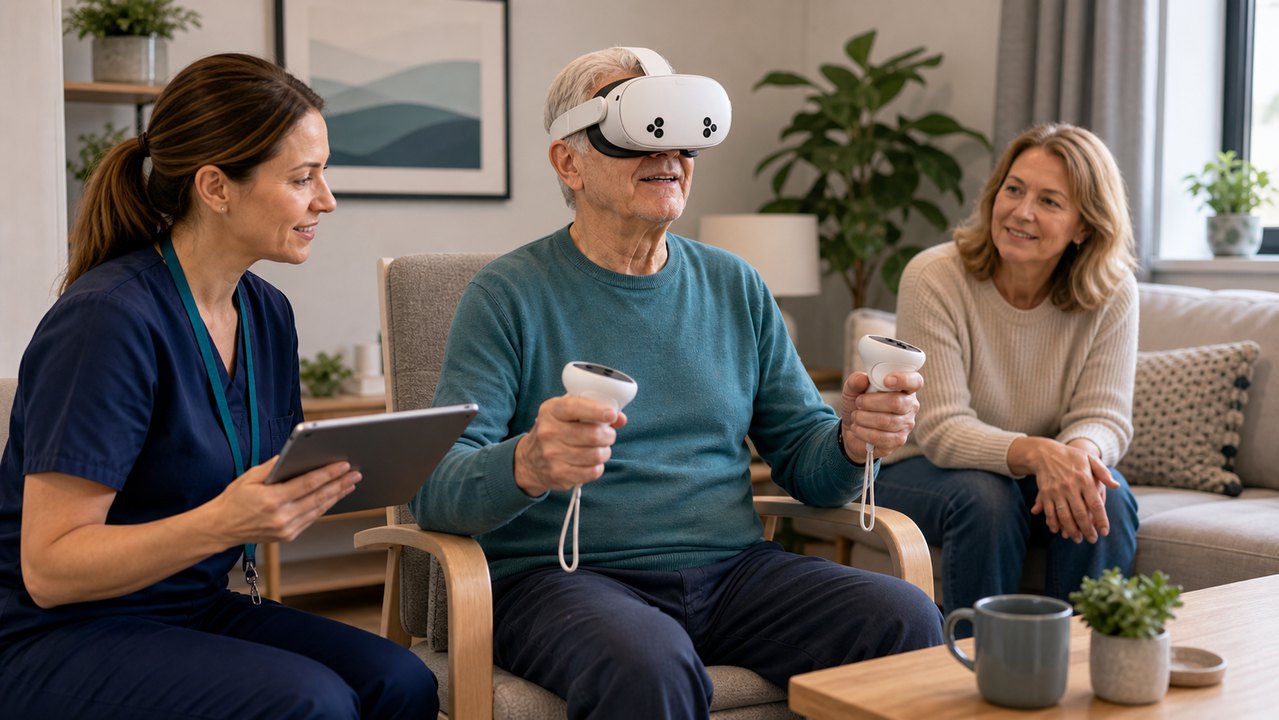
Stroke rehabilitation often changes shape after discharge. Hospital therapy may focus on early recovery, safety, assessment, and immediate functional goals. At home, different questions appear: can the person manage routines, cope with fatigue, use strategies, follow instructions, accept support, and build confidence in real environments?
The 2026 AHA/ASA adult stroke rehabilitation and recovery guideline gives home and community rehabilitation a clear role. For services thinking about digital rehabilitation, remote support, and cognitive recovery, this part of the guidance is especially relevant.
Ongoing rehabilitation after discharge
The Guideline Central pocket guide summarises a strong recommendation that people discharging from hospital with recent stroke should receive ongoing community- or home-based rehabilitation when feasible to achieve functional goals.
That is a simple statement with big operational implications. Rehabilitation should not fall away just because the patient has left the ward. The setting changes, but the need for structured goals, review, support, and progression often remains.
For cognitive rehabilitation, discharge can actually reveal new needs. A person may cope in a structured hospital environment but struggle when daily life becomes less predictable. Home routines involve interruptions, choices, noise, fatigue, family dynamics, and real-world consequences.
Home-based multidisciplinary rehabilitation
The guideline also states that home-based multidisciplinary rehabilitation is a reasonable alternative to clinic-based rehabilitation for people living at home after stroke, including functional goals in mobility, self-care, and cognitive or communicative function.
This matters because cognitive rehabilitation often needs to be linked to ordinary routines. Self-care, meal preparation, object finding, medication routines, shopping, household tasks, communication, and community participation are not separate from cognition. They are where cognition is used.
Home-based rehabilitation can help clinicians see the person in context. It can also help families understand why difficulties happen and how to support independence safely.
Telerehabilitation and access
The guideline says telerehabilitation therapies are reasonable alternatives to in-person therapies for people living at home after mild to moderate stroke when access to in-person therapies is limited or absent.
The AHA/ASA top take-home messages also note that telehealth can support transitions and rehabilitation across the continuum after stroke, improve access, and improve cost-effectiveness.
This is relevant for rural services, transport-limited patients, overwhelmed community teams, and families trying to maintain rehabilitation momentum after discharge. It does not mean remote delivery is always suitable. It means services should consider it as part of a flexible pathway when safety, suitability, support, and governance are in place.
What digital tools need to provide
For home and community rehabilitation, a digital tool has to do more than deliver content. It needs to fit into a pathway.
Useful questions include who selects the patient, who introduces the tool, what goal is being targeted, how the activity is graded, what the patient or helper should do if there is a problem, how the clinician will review progress, how fatigue or intolerance is managed, and when the programme should stop, pause, or change.
These questions are especially important for headset-based rehabilitation, where patients and helpers may need support with setup, safety, comfort, internet connectivity, and understanding what the activity is for.
Why reassessment matters
The guideline highlights periodic reassessment and re-engagement in therapy over time. It also emphasises standardized outcome measures across body structure and function, activity, and participation levels.
For services, this is a reminder not to judge rehabilitation only by first-use engagement. A patient may enjoy a tool initially but need progression to keep it meaningful. Another may struggle at first but benefit once the activity is simplified. Others may need a different intervention entirely.
Outcome review should include clinical measures, functional goals, patient experience, safety, missed sessions, support needs, and caregiver feedback.
Where CorteXR Stroke fits
CorteXR Stroke is being designed for cognitive stroke rehabilitation across hospital, community, and home use cases. The relevant alignment with the guideline is the pathway logic: clinician-led programme configuration, functional task practice, support content for patients and helpers, and review through a clinical portal.
Technology cannot close the discharge gap on its own. When it is clinically appropriate, structured and supported digital rehabilitation may help services extend practice and review beyond the clinic as one part of a wider pathway.
The useful takeaway
The 2026 AHA/ASA guidance supports a connected model of stroke rehabilitation: ongoing care after discharge, community and home-based rehabilitation where feasible, telerehabilitation where access is limited, caregiver support, and periodic reassessment.
For cognitive rehabilitation, that points towards practical service design. The best tools will be the ones that help clinicians continue meaningful practice, support families, and review progress without losing sight of safety, suitability, and individual goals.
Useful references
- 2026 AHA/ASA guideline in Stroke: Adult Stroke Rehabilitation and Recovery
- Guideline Central: AHA/ASA Adult Stroke Rehabilitation and Recovery pocket guide
- AHA newsroom: Stroke rehab should start early and address physical, cognitive and mental health
Medical note: This resource is for general information and service planning. Stroke survivors and families should follow advice from their own clinical team.