
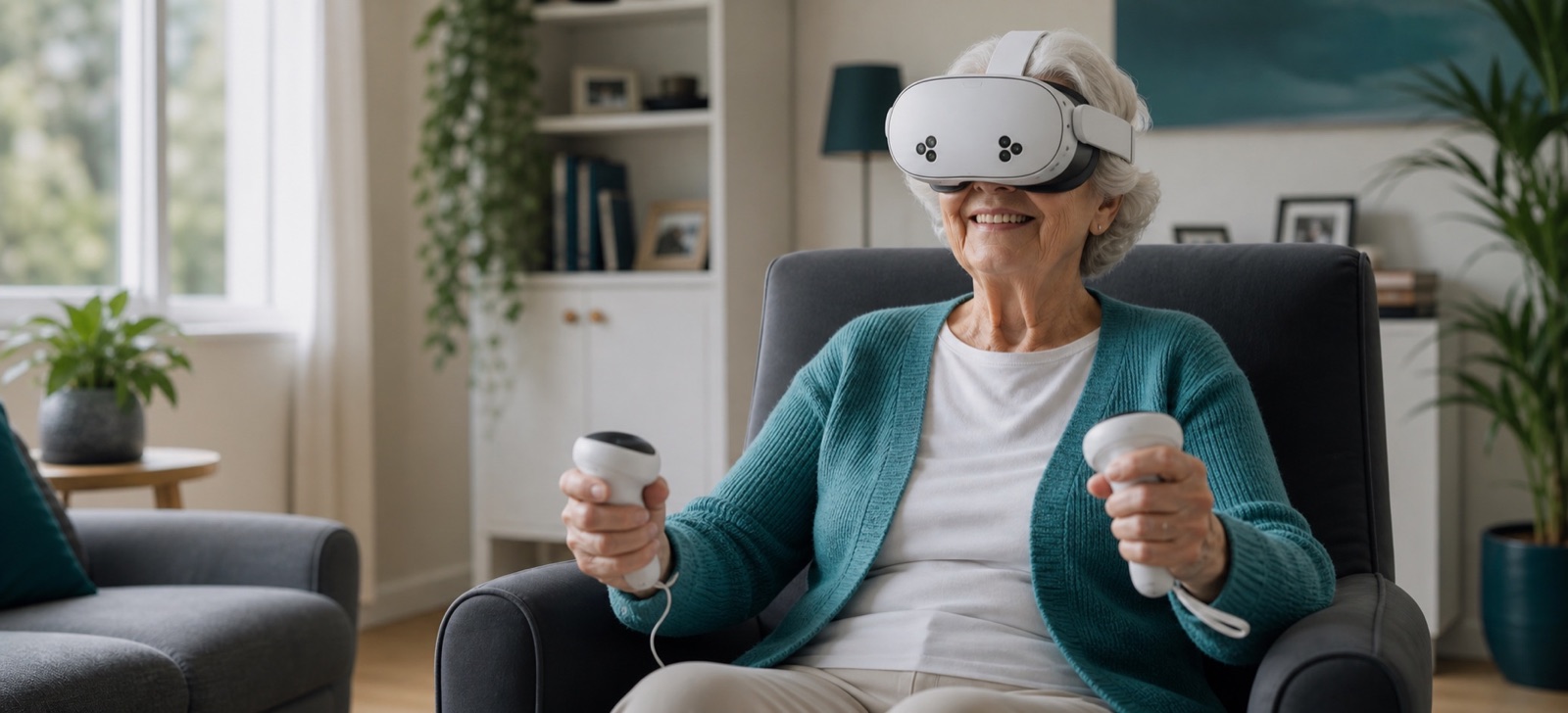
Community stroke services often support people at a difficult point in recovery: the person has left hospital, but rehabilitation needs continue. Families may be adapting to new routines, clinicians may be balancing caseload pressure, and patients may be trying to rebuild confidence at home.
Digital rehabilitation tools have potential in this setting, but only when they are realistic about service pressures and patient needs. The practical starting point is a defined rehabilitation goal, a suitable way to practise, and a named team responsible for support and review.
The 2026 NHS England context
NHS England’s community health service descriptions, published in March and updated in April 2026, provide service-planning guidance for commissioners and providers. The intermediate care section includes suitable uses of digital tools for remote assessment, delivery, monitoring and advice. It describes intermediate care as generally lasting no more than six weeks.
That description is not a six-week limit on all stroke rehabilitation. NHS England’s wider community service framework separately identifies longer-term stroke and neurological rehabilitation pathways. These are England-specific planning documents, not a UK-wide clinical recommendation for VR or an endorsement of a product.
For a community stroke team, a useful implementation question is how responsibility will transfer when a person leaves one service but continues to need support. A digital programme needs an agreed handover just as other parts of care do.
Telerehabilitation and VR describe different things
Telerehabilitation describes rehabilitation delivered at a distance. VR describes a way of presenting an activity or environment. A remotely delivered session can use ordinary video communication; a VR session can take place face to face in a clinic.
For adult stroke rehabilitation, NICE NG236, recommendations 1.3.1 to 1.3.3, says to consider telerehabilitation when it suits the person’s preference or agreement and rehabilitation goals, provide equipment and support, and monitor benefit and signs of depression. Our home and community guideline article discusses the related AHA/ASA perspective.
A hospital-to-home handover checklist
The following is a practical service-planning checklist, rather than a checklist prescribed by NHS England. Complete it for the proposed digital activity before the person starts at home.
| Handover item | What to agree and record |
|---|---|
| Everyday goal | The activity the person wants to work towards and the reason for choosing digital practice. |
| Starting activity | The selected task, current settings and level of help used in the supervised introduction. |
| Suitability and access | Comfort, communication, vision, fatigue, controls, home space and any helper or connectivity needs. |
| Clinical ownership | Who selects and adjusts the activity, who reviews it and when the next review will happen. |
| Help and stopping | How to pause or stop, where technical questions go and how clinical concerns reach the team. |
| Transition or discharge | Who receives the handover, what happens to equipment and how further needs are referred. |
Use the VR cognitive rehabilitation pathway checklist for a broader review of referral, suitability and implementation.
Keep the cognitive goal visible
For example, a team might discuss a person’s goal of organising a small shop. The handover could record the list used, which items were missed and whether prompts helped the person check their selection. It should also say how the team intends to review the corresponding everyday activity. Time spent in a headset alone cannot answer whether the person’s shopping routine has changed.
See our shopping task example and functional cognition guide for ways to frame the activity. Canada’s updated cognitive rehabilitation recommendations provide an international perspective on individual goals and the limits of technology evidence.
For services also working with other neurological conditions, our NICE NG252 article covers that separate guideline. NG252 excludes adult stroke rehabilitation.
What community services need
Community rehabilitation tools need to be:
- easy to deploy
- safe to use in real homes or community settings
- understandable for patients and helpers
- clinically configurable
- supported when something goes wrong
- measurable enough to inform review
- governed appropriately for healthcare use
Tools that create more admin, require fragile setup, or depend on unsupported patient self-management are unlikely to help.
Why continuity matters
Stroke rehabilitation can lose momentum when the patient moves between hospital, community care, and home. Digital tools can help if they create a clearer thread between therapy planning, practice, support, and review.
For VR rehabilitation, that might mean a clinician sets a programme, the patient practises with support, and progress information can be reviewed later. The key is not technology for its own sake. It is continuity of care.
Continuity also matters emotionally. Patients and families can feel exposed after discharge. Clear instructions, reliable support options, and visible clinical oversight can make digital rehabilitation feel safer and more purposeful.
Safety and accessibility
Community deployment needs careful attention to fatigue, dizziness, vision, cognition, balance, seating, helper availability, internet connectivity, and escalation routes. Some patients will not be suitable for headset-based therapy at a given time, and that decision should sit with the clinical team.
Digital inclusion also matters. Support materials need plain language, clear videos, and routes for families or helpers to ask for help.
Data and governance considerations
Digital tools used in rehabilitation may involve patient data, remote access, cloud services, user accounts, or clinical dashboards. Services need to consider information governance, cyber security, clinical safety, and support arrangements.
In NHS contexts, the Digital Technology Assessment Criteria can help frame questions around clinical safety, data protection, technical security, interoperability, usability, and accessibility. For products with a medical purpose, regulatory status and intended use also matter.
CorteXR Stroke’s community relevance
CorteXR Stroke is being shaped around hospital-to-home use cases: immersive cognitive practice, clinical portal review, and patient/helper support. That makes community deployment an important part of the product story.
The opportunity is to help teams extend structured cognitive practice beyond the clinic while keeping clinical oversight and support visible.
Service leads may also want to read clinical governance questions for VR rehabilitation technology and supporting stroke rehabilitation at home with VR.
What services should measure
Community services may want to know whether a digital tool improves access to practice, increases confidence, supports continuity, or reduces avoidable burden on staff. These questions require more than usage statistics. They may involve patient feedback, staff experience, safety events, support requests, and whether the tool helps achieve rehabilitation goals.
For early implementation, qualitative feedback can be especially useful. Clinicians can identify where onboarding is unclear, where patients need more support, and which parts of the pathway create friction. This feedback should shape the product and service model over time.
How to avoid digital rehabilitation becoming a pilot that fades
Many digital health projects begin with enthusiasm and then fade because implementation is not resourced. Community rehabilitation teams need time to learn the workflow, confidence that support is available, and evidence that the tool is worth the effort. A successful rollout usually starts with a clear use case, a small group of suitable patients, and honest feedback from staff and families.
The service should decide what success means before deployment. Success might be more structured home practice, better patient confidence, improved continuity between settings, or clearer review of activity progression. If the goal is unclear, it becomes difficult to judge whether the tool is helping.
It is also important to identify who owns the pathway after the first session. If a headset goes home, who checks whether it is being used? Who responds to support requests? Who adjusts the programme? Who decides when to stop? These questions should be answered before scale-up.
The importance of support content
Support content is not an afterthought in community digital rehabilitation. It is part of the intervention environment. A patient or helper who cannot remember how to start a session, connect a headset, or ask for help may stop using the system even if the therapy itself is appropriate.
Support materials should therefore be written for real people under pressure. They should be short, clear, visual where possible, and easy to find. They should avoid assuming that the helper is technically confident or clinically trained. In stroke rehabilitation, accessibility is not just about screen readers and contrast. It is also about cognitive load.
Useful references
- NHS England: Standardising community health services, updated March 2026
- NHS England: Core component descriptions, updated April 2026
- NICE guideline NG236: Stroke rehabilitation in adults
- SSNAP clinical audit
- NHS England: Digital Technology Assessment Criteria
- CorteXR Stroke support hub
Medical note: This resource is for general information and service planning. Stroke survivors and families should follow advice from their own clinical team.